AI Immersive Room, Museum of Science, Boston
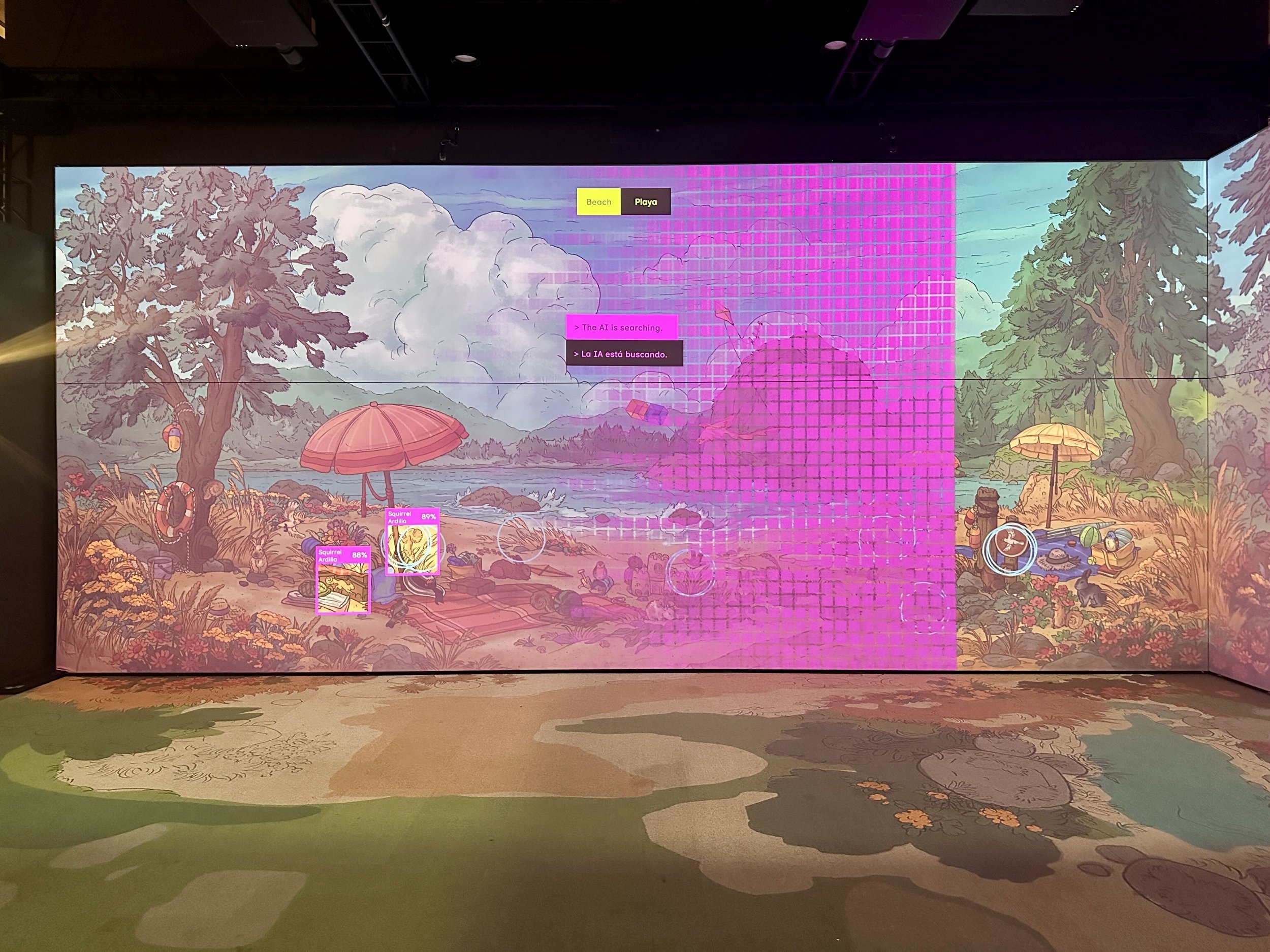
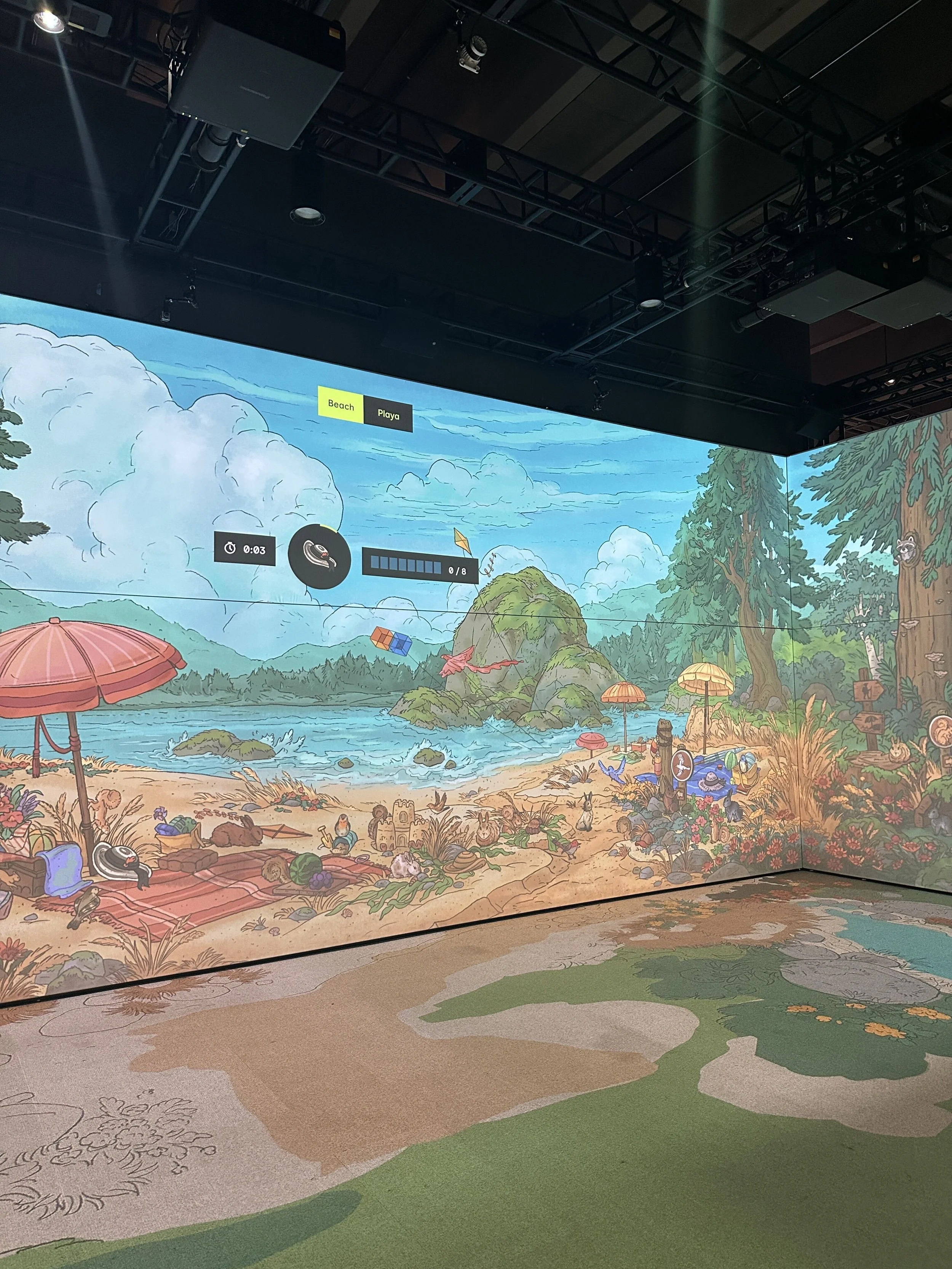
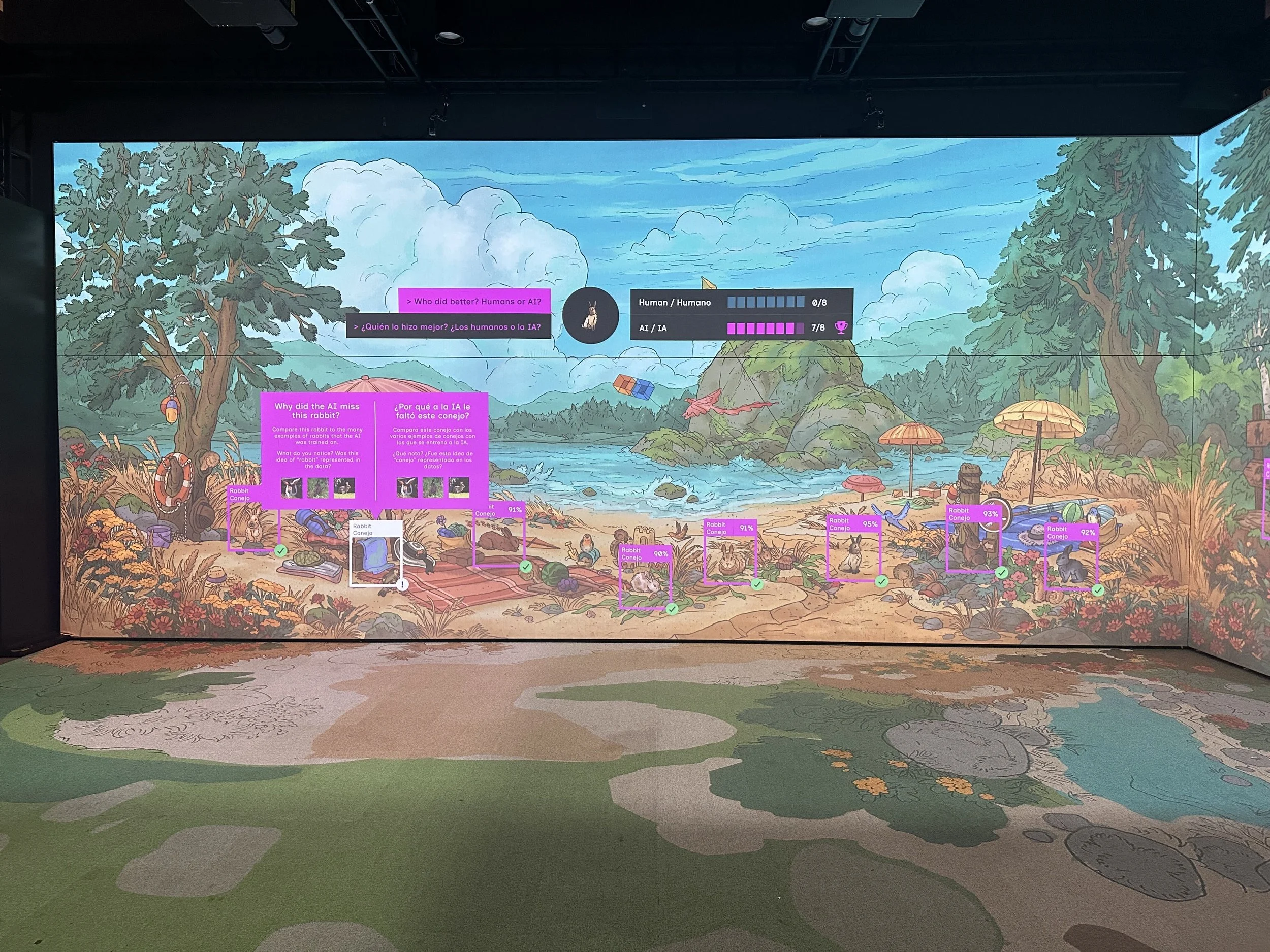
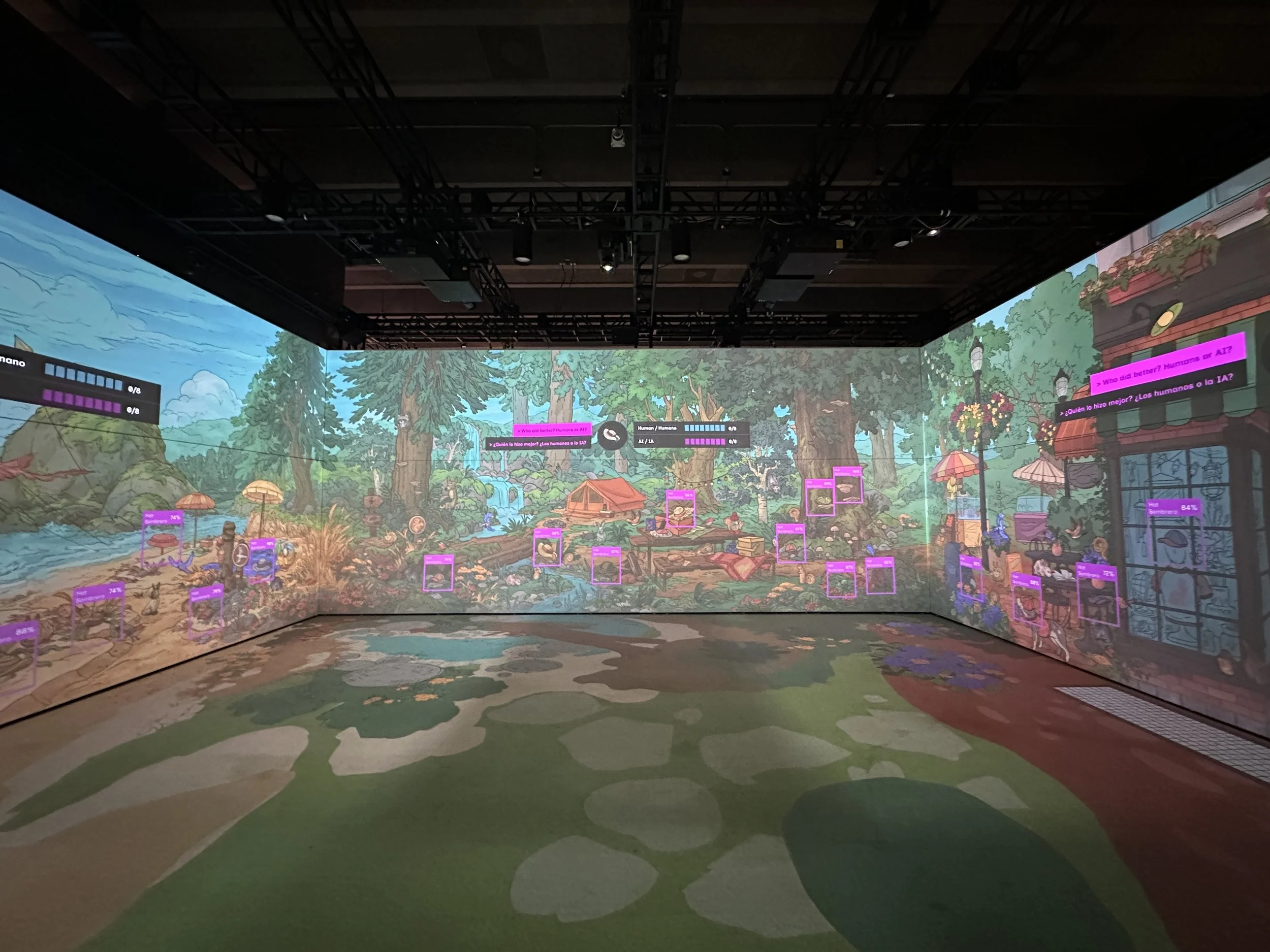
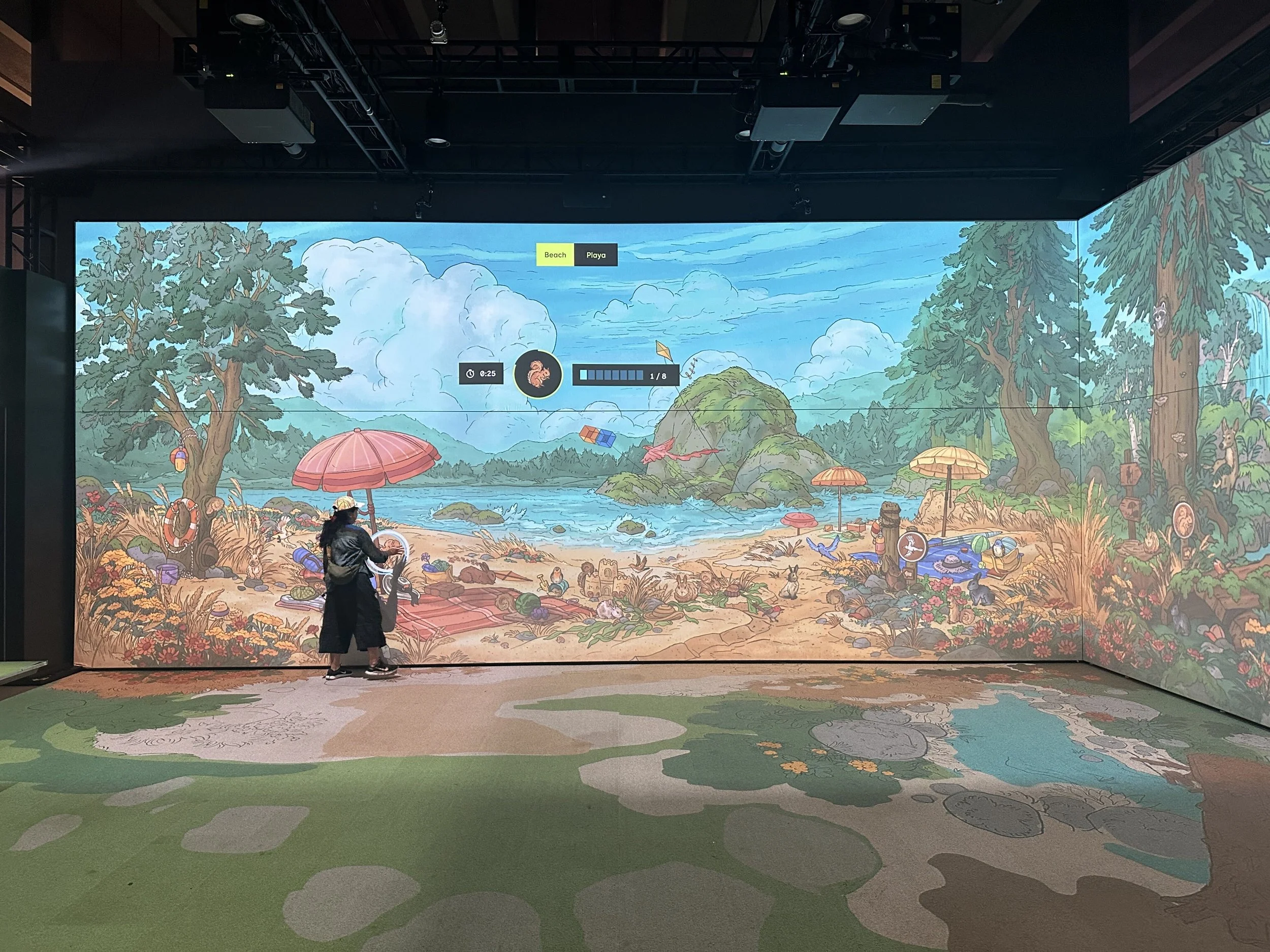
For the Museum of Science’s Science Now gallery, we created a multi-user, player-versus-AI game for the museum’s Immersive Room, a four-surface environment with three 32-foot projection walls and a projected floor. Visitors explore a continuous illustrated landscape that stretches from beach to forest to city, racing to find hidden characters by touching the walls. Then an AI model takes its turn. At the end of each round, the room compares the visitors’ finds with the AI’s and plays back its reasoning, highlighting where the model succeeded, where it made mistakes, and why. Rather than declaring a winner, the experience invites visitors to reflect on how machines “see” and where human perception still has the edge.
I built the experience’s Unity software across all four surfaces, including LiDAR-based people tracking that turns visitors’ movement on the floor and touch on the walls into input. The software synchronizes every wall and the floor so the room behaves as one responsive space. It also loads its scenes and settings from files at runtime, so the museum can re-skin the experience and share it with other museums as open-source content.
Credits
Studio: Hyperquake
Role: Lead Creative Technologist